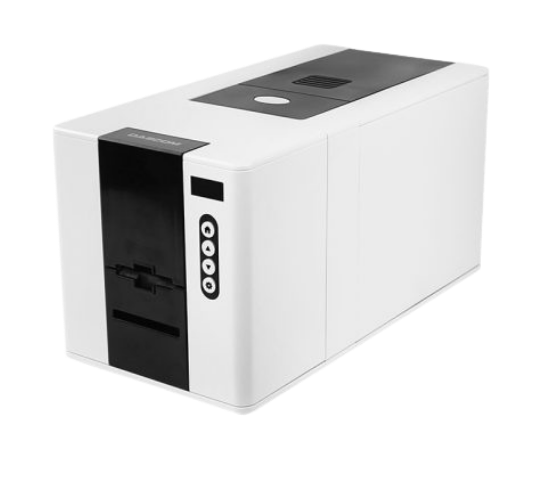
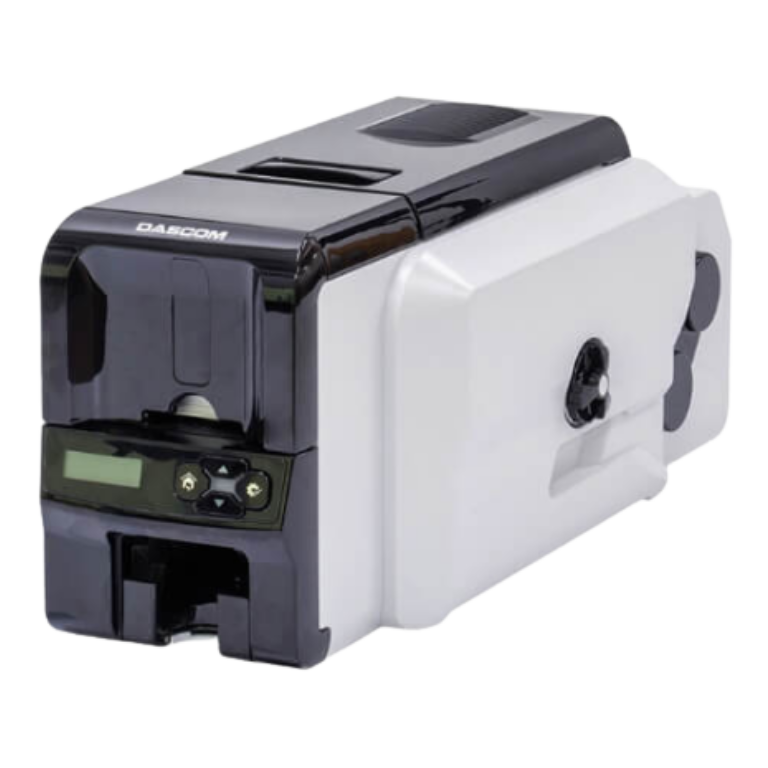
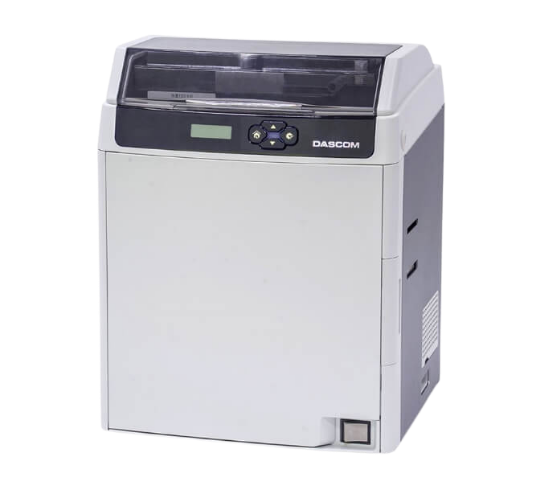
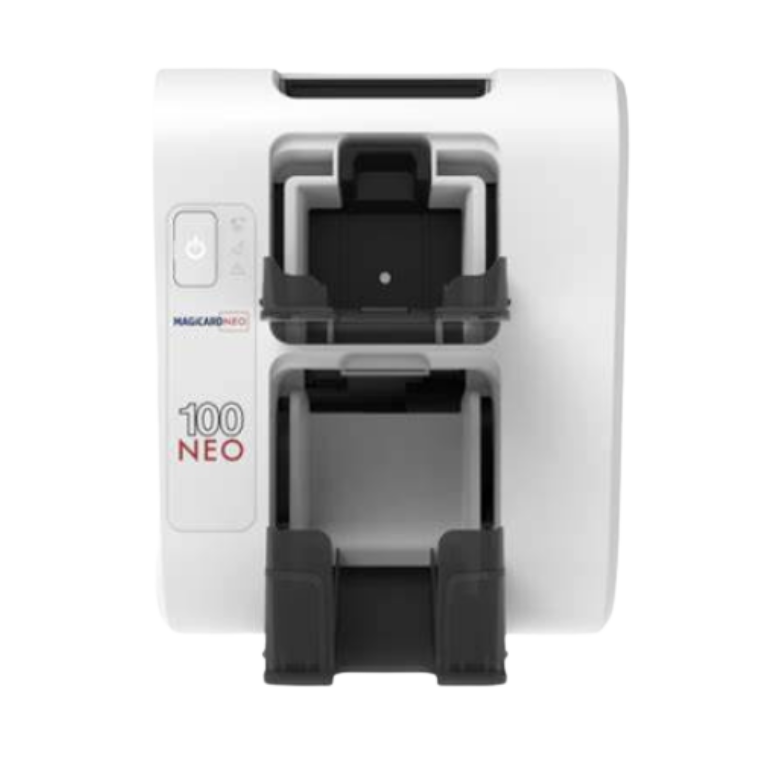
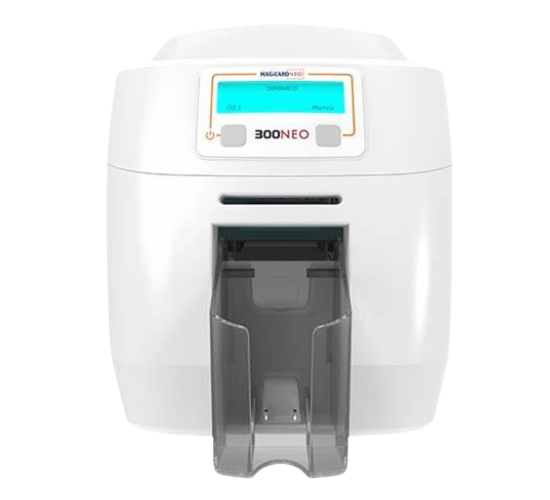
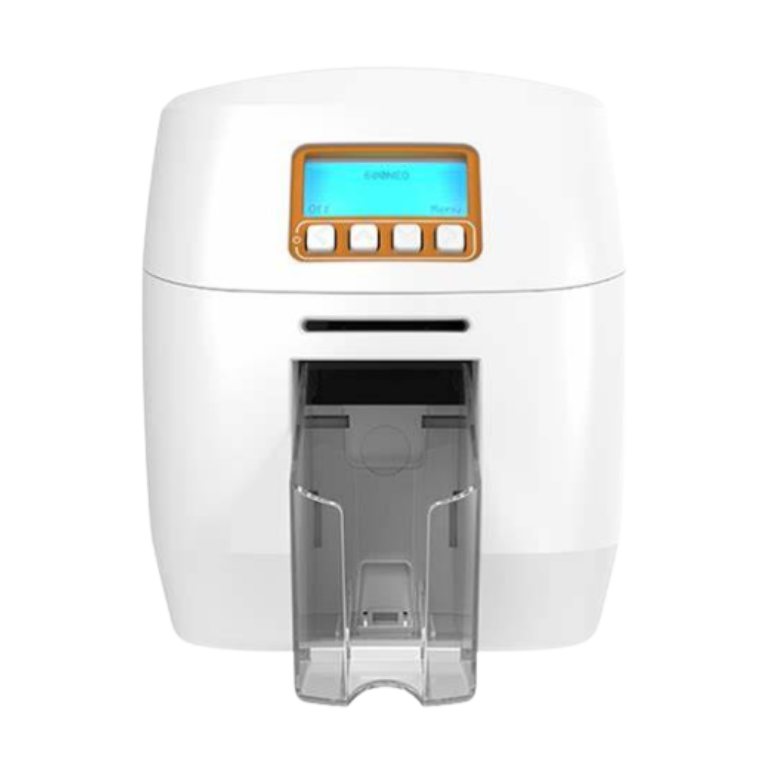
Card Printer
PRINT CAPABILITIES: Single Sided and Dual Sided
CARD THICKNESS: 10-40 mil
CARD SIZE: CR-80, ISO 7810 format, Type ID-1, CR79*
CARD MATERIAL: PVC and PVC Composite
OPTIONAL ENCODING: Magnetic Stripe Encoder, MIFARE ISO contactless, UHF RFID encoder
RESOLUTION: 300 dpi
COMMUNICATION:
STANDARD: USB, Built-in Ethernet
OPTIONAL: 802.11ac
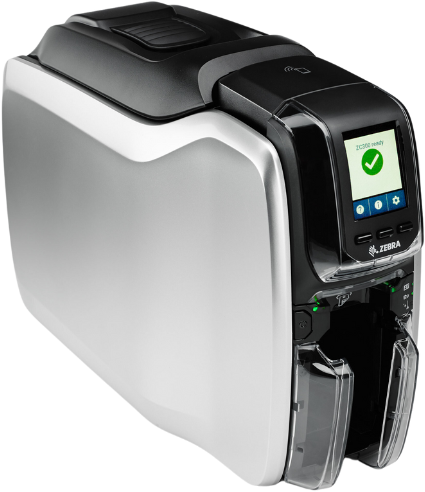
No matter what type of card you need to print — from identity and access to membership, event and credit/debit cards — the ZC300 Series card printers will help you do it better, faster, and easier. If you can dream it, you can print it — single or dual-sided, colour, black and white or metallic. You can even embed security marks on the fly — a first for a printer in this price point. Add a magnetic stripe or create a contact or contactless card. No matter how complex your cards are, the ZC300 makes it easy — Zebra’s Industrial Design team has elegantly engineered the ZC300 to address and eliminate virtually all pain points associated with card printing. And with a ground-breaking fits-everywhere design, you can get secure card printing wherever you need it.
RELATED PRODUCTS
ZC10L
Large-Format Printer
ZC100
Card Printer
ZC300
Card Printer
DC-240
Card Printer
DC-2300
Card Printer
DC-3300
Card Printer
DC-7600
Card Printer
100 NEO
Card Printer
300 NEO
Card Printer
600 NEO
Card Printer
FAQ: Do I need a driver for the Barcode label installation?
Answer: Our technical experts will walk you through the Barcode Designer's installation and activation process.
FAQ: Is the barcode label waterproof?
Answer: Not all labels are resistant to being exposed to water. For this requirement, polyester works best.
FAQ: In a barcode, how many characters are stored?
Answer: As much data as you want can be inserted into a 1D barcode symbology, but keep in mind that since the barcode will extend, it is not recommended to include more data. The best symbology for any length of more than 7000 characters is a 2D barcode, similar to a QR code.
FAQ: Can I print any barcode in the barcode Printer?
Answer: Yes
FAQ: In what environment will the printer be used?
Answer: All barcode printers operate in a variety of industrial settings, including manufacturing, retail, transportation and logistics, and hospitals.
FAQ: How often will you print?
Answer: Printing demand depends on End-user workloads
FAQ: Can I use RFID Tags in Jewelry?
Answer: Yes, Jewelry Tags are available in Zebra RFID Labels portfolio
FAQ: Can I use RFID in inventory?
Answer: Yes, it is typically utilized for asset and inventory tagging.
FAQ: Are batteries used in certain barcode printers?
Answer: Installing a spare battery is an option for some barcode printers. Mobile printers, however, are specifically powered by battery modules.
FAQ: Can a barcode printer produce color output?
Answer: No, Barcode printers are typically used to print black and white labels, they can also print color labels.
FAQ: Do you have a Barcode Designer for the Barcode Printer?
Answer: Yes, we provide software for Label design, Seagull Bartender, Zebra Designer and Loftware by Nice Label
FAQ: Can the barcode Printer work 24/7?
Answer: Only industrial printers are designed to last this long.
FAQ: How many labels can a barcode printer print?
Answer: Depending on the barcode printer, up to 10 to 50 rolls may be produced each day.
FAQ: Can the Ribbon be rewinded and used again?
Answer: Reusing the ribbon will result in poor print quality, so it is not advised.
FAQ: What comes in the box for Barcode Printers?
Answer: User guides, a power cord or cords, and a power supply with a USB cable are all included with the barcode printer.
FAQ: Do you offer a barcode printer with a screen display?
Answer: Industrial printers are similar to desktop printers in that some models have a display screen while others do not.
FAQ: Can the Ribbon be rewinded and used again?
Answer: Reusing the ribbon will result in poor print quality, so it is not advised.
FAQ: How many labels can a barcode printer print?
Answer: Depending on the barcode printer, up to 10 to 50 rolls may be produced each day.